Electric Car Range and Price: What Ferrari Luce India Means
Ferrari Luce India debut signals charging and policy shifts that affect every EV buyer. We break down electric car range and price, with real numbers and picks.
## The Ferrari Luce Lands in India, and Your Next EV Should Care
Ferrari's first electric car, the Luce, has just made its India debut, and it will not be cheap: expect a sticker well north of ₹4 crore when deliveries begin. That number is irrelevant to almost everyone reading this. What matters is the second-order effect. When a marque like Ferrari commits to electric, it drags charging standards, luxury tax policy and dealer investment along with it. Those shifts move the **[electric car range and price](/blog/2027-hyundai-tucson-s-radical-redesign-worth-waiting-for)** math for the rest of us, and this piece explains how.
Here is the blunt version: the Luce changes nothing about what you should buy in 2026, but it changes several things about what you will be able to buy by 2029. If you are shopping for an EV in India now, the Luce is not an option. It is a signal. Read it as one.
### What the Luce actually is
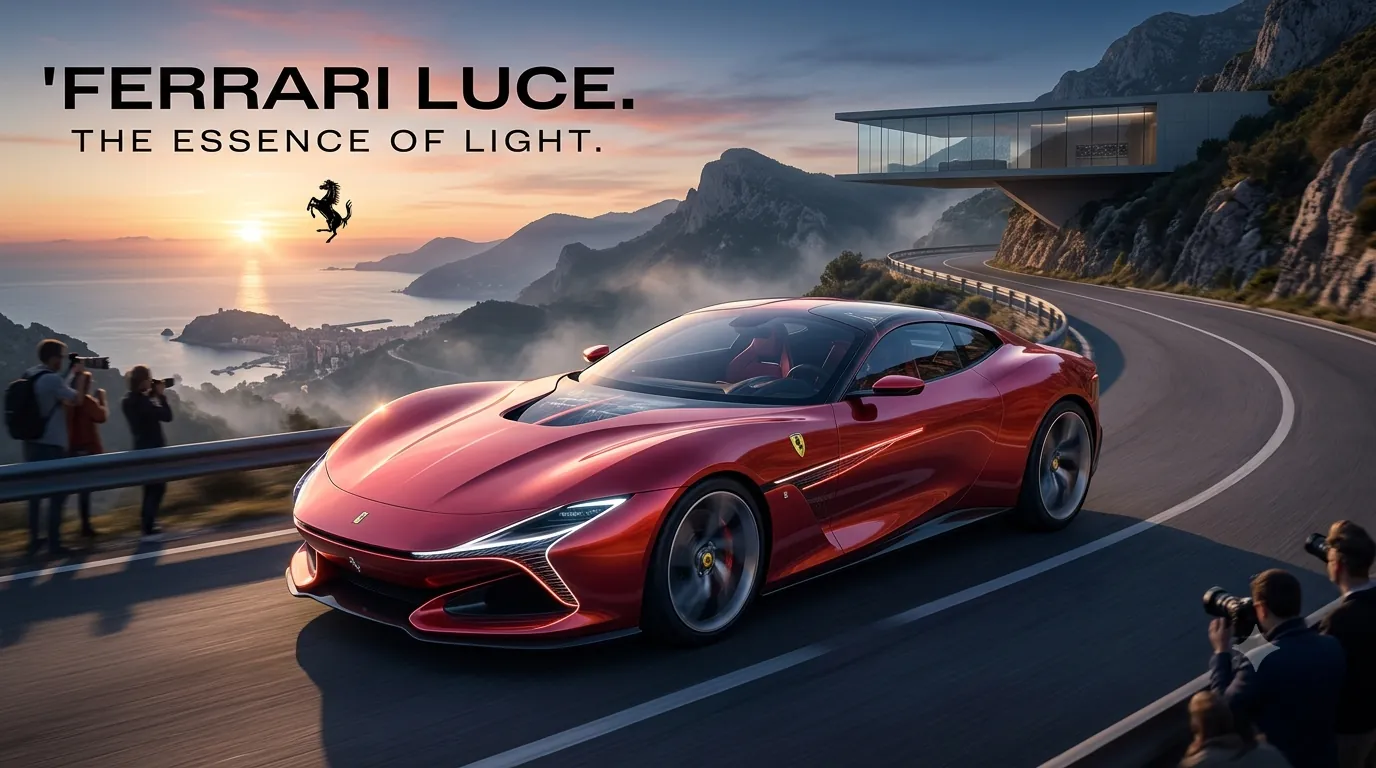
Ferrari has kept most performance figures under wraps at the India preview, but the confirmed shape of the car is clear. It is a four-door, four-seat grand tourer, not a two-seat supercar, which is the single most telling detail. Ferrari is not building an electric toy. It is building an electric daily driver for people who already own three cars. Launch timeline for Indian deliveries sits in the 2027 to 2028 window, with pricing to be announced closer to that date.
For context, the cheapest Ferrari you can buy in India today is already past ₹4 crore on road. The Luce will sit above that. This is a car for a buyer who does not check the price tag, and that is exactly why its arrival matters to the rest of the market: it validates the top end of the EV spectrum, which historically has been the slowest to electrify.
### Why a luxury debut moves the needle for ordinary buyers
Three mechanisms, and they are worth understanding because they determine what you pay in 2028.
**Charging infrastructure follows the money.** High-end EV buyers demand fast, reliable DC charging at hotels, malls and highway stops. When a brand like Ferrari enters, it pressures operators to install 150 kW and above chargers in the corridors its customers use (Mumbai to Pune, Delhi to Jaipur, Bengaluru to Coorg). Those chargers are not exclusive. Every Tata, MG and Hyundai driver benefits from the same hardware.
**Policy attention shifts.** India's EV import duty regime has been the subject of fierce debate, with a scheme allowing reduced duty on high-value imported EVs in exchange for local manufacturing commitments. A Ferrari arriving through that route, or lobbying for it, keeps the conversation alive. What gets negotiated for a ₹4 crore car often sets precedent for a ₹40 lakh one.
**Battery and component supply chains scale.** Luxury volumes are tiny, but the supply contracts signed for them pull cell manufacturers and pack assemblers into India. That is the slow, boring work that eventually makes a ₹15 lakh EV with 500 km of range possible.
### The worked example: what ₹40 lakh buys you today versus 2029
Let us put real numbers on the table. Say you have a budget of ₹40 lakh on road and you want a family EV with genuine highway range. Here is the honest comparison.
| Factor | Today (2026) | Plausible 2029 |
|---|---|---|
| Typical real-world range | 350 to 420 km | 480 to 550 km |
| Fast charging on highway corridors | Patchy, 50 kW common | Denser, 100 to 150 kW common |
| Battery warranty | 8 years / 1.6 lakh km | 8 to 10 years, longer km |
| Resale confidence | Weak, uncertain | Improving but still soft |
A car like the [Hyundai Ioniq 5](/blog/byd-s-most-powerful-electric-car-in-india-what-buyers-need-to-know) or BYD Seal, both around ₹45 to ₹50 lakh on road in India, already delivers 450 to 500 km of claimed range, with real-world figures closer to 380 to 420 km. That is workable. The problem is not the car. It is the charger you cannot find between Nashik and Nagpur, and the resale value nobody can predict.
The Luce does not fix either problem directly. But the infrastructure investment it triggers, and the policy noise it generates, is the mechanism by which both improve. That is the chain of causation worth tracking.
### The options in front of you now
If you are shopping in the ₹25 to ₹60 lakh band, here is the realistic menu.
- **Tata Nexon EV and Curvv EV**: ₹15 to ₹25 lakh, 400 to 500 km claimed, best-in-class service network. Range anxiety is real on long trips.
- **MG Windsor and ZS EV**: ₹14 to ₹28 lakh, strong value, decent charging support.
- **[Hyundai Ioniq 5](/blog/tesla-model-y-6-seater-worth-the-wait-for-indian-families) and Kia EV6**: ₹45 to ₹65 lakh, genuine 400 km plus real-world range, 800V architecture on the EV6.
- **BYD Seal and Atto 3**: ₹25 to ₹55 lakh, strong battery tech, thinner dealer network.
- **Wait and see**: a legitimate option if your current car has two years left in it.
### Our take
None of these is a Ferrari, and none needs to be. But the honest recommendation for most readers is this: if you can wait 18 to 24 months, wait. The 2027 to 2028 model years will bring 500 km plus real-world range at the ₹30 lakh mark, and the charging network will have matured enough that a highway trip stops being a planning exercise.
If you cannot wait, buy the **Hyundai Ioniq 5** or the **Kia EV6** if your budget stretches to ₹50 lakh. Both have proven battery management, real fast-charging capability and a dealer network that will not leave you stranded. If your budget is ₹25 lakh, the **Tata Curvv EV** is the pragmatic pick, with the caveat that you should plan highway routes around known chargers, not around hope.
Do not buy a luxury EV in India today expecting it to hold value. The segment is too young, and the Luce's arrival is a reminder that the top end is about to get crowded.
### What to do with this
Track two things over the next year. First, the number of 100 kW plus public chargers on the corridors you actually drive. Second, the resale listings for two-year-old EVs in your budget. When the first number rises and the second stops falling, that is your green light. The Ferrari Luce is not your car, but it is a useful bellwether. Watch it, and let it tell you when to buy.
## FAQ
**Will the Ferrari Luce be available to buy in India soon?**
Deliveries are expected in the 2027 to 2028 window. Pricing will be announced closer to launch, and it will sit well above ₹4 crore on road.
**Does a luxury EV launch actually lower prices for regular buyers?**
Not directly. It accelerates charging infrastructure and supply chain investment, which improves the value proposition of mainstream EVs over three to five years.
**Should I wait for better range before buying an EV in India?**
If your current car can last another 18 to 24 months, yes. Real-world range and charging density are both improving fast enough that waiting pays off.
Frequently asked questions
Will the Ferrari Luce be available to buy in India soon?
Deliveries are expected in the 2027 to 2028 window. Pricing will be announced closer to launch, and it will sit well above ₹4 crore on road.
Does a luxury EV launch actually lower prices for regular buyers?
Not directly. It accelerates charging infrastructure and supply chain investment, which improves the value proposition of mainstream EVs over three to five years.
Should I wait for better range before buying an EV in India?
If your current car can last another 18 to 24 months, yes. Real-world range and charging density are both improving fast enough that waiting pays off.
 CarsbikesPrices