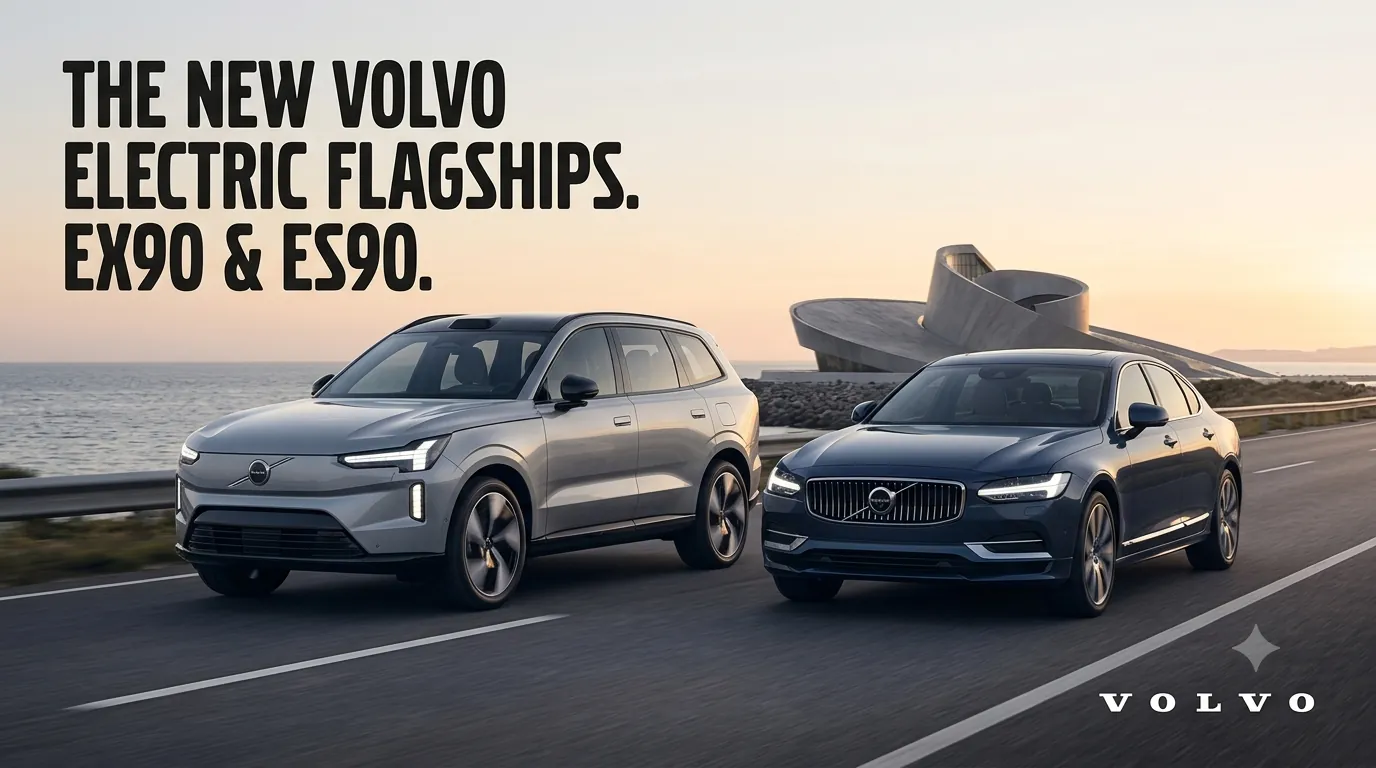
We compare the Volvo EX90 and ES90 on electric car range and price in India, with real world figures, INR pricing and a clear pick for each buyer.
## Two very different Volvos, one awkward question
A family of four walks into a Volvo showroom with a budget of around Rs 1 crore. The salesperson points at two cars: the tall, boxy EX90 SUV and the low, sleek ES90 fastback sedan. Both are electric. Both wear the same badge. The price gap between them is smaller than most people expect, which is exactly what makes the decision harder.
We are comparing the **Volvo EX90** and the **Volvo ES90** here, because these are the two flagships that now define Volvo's electric lineup in India. The EX90 is for the buyer who needs three rows, a high seating position and the ability to swallow a week's luggage. The ES90 is for the buyer who drives themselves, values range and rear seat comfort, and rarely needs a third row. If you are weighing **electric car range and price** across these two, the answer is not "pick the newer one." It depends on how you actually use the car.
### What each one is
The EX90 is Volvo's seven seat [electric SUV](/blog/volvo-ex90-india-launch-price-features-and-everything-else), built on the SPA2 platform, with a 111 kWh battery (usable). It sits above the XC90 in the range and is the brand's tech flagship.
The ES90 is Volvo's electric fastback sedan, sharing the same platform and battery architecture but with a lower, more aerodynamic body. It is the successor in spirit to the S90, but purely electric.
Same bones. Very different jobs.
### What they cost in India
Volvo India has priced both as CBU imports, which means import duty pushes the sticker well above what buyers in Europe pay. Here is the honest picture as of October 2026:
| Variant | Ex-showroom (INR) | Approx. on-road (Delhi) |
|---|---|---|
| Volvo EX90 Twin Motor | Rs 1.20 crore | Rs 1.38 crore |
| Volvo EX90 Twin Motor Performance | Rs 1.35 crore | Rs 1.55 crore |
| Volvo ES90 Single Motor Extended Range | Rs 1.10 crore | Rs 1.27 crore |
| Volvo ES90 Twin Motor Performance | Rs 1.30 crore | Rs 1.50 crore |
Those are big numbers, and they are not small differences. The ES90 Single Motor undercuts the base EX90 by roughly Rs 10 lakh ex-showroom, and the gap widens once you factor in insurance slabs that scale with value. For a buyer cross-shopping both, the ES90 is the cheaper car in every like-for-like trim.
Worth noting: Volvo India has been running exchange bonuses and low-interest finance schemes on both, and those change month to month. Always ask for the current offer sheet rather than trusting a number you saw online.
### Range and charging: the real differentiator
This is where the two cars separate cleanly, and it matters more than horsepower for most Indian buyers.
| Spec | Volvo EX90 | Volvo ES90 |
|---|---|---|
| Battery (usable) | 111 kWh | 111 kWh (Twin), 92 kWh (Single) |
| Claimed range (WLTP) | Up to 600 km | Up to 700 km |
| Real world highway (our estimate) | 420 to 470 km | 500 to 560 km |
| Peak DC charging | 250 kW | 250 kW (Twin), 200 kW (Single) |
| 10 to 80 percent DC time | ~30 min | ~28 min |
The ES90 goes further on the same battery because it is lower and slipperier. That is physics, not marketing. If your use case includes regular Mumbai to Pune or Delhi to Jaipur runs, the sedan's extra 60 to 90 km of real world range is the difference between one charging stop and none.
The EX90's penalty is the shape. Tall, heavy, and with three rows of seats to haul around. It still charges fast, so a 20 minute top-up at a 150 kW plus charger gets you most of the way back.
### Space, seats and the family test
The EX90 wins this one outright, and it is not close.
- Three rows, seven seats. The third row is usable for adults on short trips, tight for long ones.
- Boot space of 310 litres with all rows up, expanding to over 1,900 litres with rows folded.
- Air suspension standard on higher trims, which helps with Indian road surfaces.
- A genuinely high seating position, which many buyers in this segment want.
The ES90 offers:
- Two rows, five seats, with limousine-grade rear legroom.
- A 500 litre plus boot, plus a front trunk.
- A lower centre of gravity, so it corners and rides better than any Volvo SUV.
- Rear seats that recline, which matters if you are chauffeured.
If you have three children or regularly carry grandparents, the ES90 is a compromise you will feel every weekend. If you have two children and mostly drive yourself, the ES90 is the better car to sit in.
### What you actually get for the money
Both cars share the same core tech story: a lidar pod on the roof (on top trims), Nvidia driven compute, the Google built-in infotainment stack, and Bowers and Wilkins audio. Volvo has not shortchanged the sedan on features to protect the SUV.
Where they differ:
1. The EX90 gets a head-up display standard on Performance trims. The ES90 offers it as an option on the base car.
2. The EX90 has a panoramic roof that opens. The ES90's is fixed.
3. The ES90 gets massaging rear seats. The EX90 does not, at any price.
That last point tells you who Volvo thinks buys each car. The EX90 is for the driver with a full house. The ES90 is for the passenger with a driver.
### Our take
We would not buy either without first deciding one thing: do you need a third row? Everything else follows from that.
**If you need seven seats**, buy the Volvo EX90 Twin Motor. Skip the Performance trim unless you specifically want the extra 100 hp, because in Indian traffic you will never use it, and the Rs 15 lakh premium buys you nothing you will feel daily. The base Twin Motor is the smart buy.
**If you do not need seven seats**, buy the Volvo ES90 Single Motor Extended Range. It is the value pick of the entire Volvo electric range in India. You get the longest real world range, the best rear seat, and you save roughly Rs 10 to 20 lakh against any EX90. The Twin Motor ES90 is only worth it if you want all-wheel drive for hill driving or wet-season confidence.
**If you are undecided**, wait. Volvo is expected to localise assembly in India within the next 18 months, and that could shave a meaningful amount off both stickers. Paying CBU prices today for a car that may drop Rs 15 lakh in 2028 is a real risk. If you can hold, hold.
One more thing. Neither car is a value proposition at these prices. You are paying for safety engineering, Scandinavian restraint, and a badge that does not shout. If you want maximum range per rupee, a well-specced Korean or Chinese electric SUV will beat both. If you want a Volvo, you already know why.
## FAQ
**Is the Volvo ES90 cheaper than the EX90 in India?**
Yes. The ES90 Single Motor Extended Range starts around Rs 1.10 crore ex-showroom, roughly Rs 10 lakh below the base EX90. Like-for-like Twin Motor trims are also cheaper in the sedan.
**Which has better real world range, the EX90 or ES90?**
The ES90. Same battery, lower body, less weight. Expect 500 to 560 km on a highway run versus 420 to 470 km for the EX90.
**Should I wait for local assembly before buying either?**
If you are not in a hurry, yes. Local assembly would cut import duty and could reduce prices by a meaningful margin. If you need a car this year, buy now and accept the CBU premium.
Frequently asked questions
Is the Volvo ES90 cheaper than the EX90 in India?
Yes. The ES90 Single Motor Extended Range starts around Rs 1.10 crore ex-showroom, roughly Rs 10 lakh below the base EX90. Like-for-like Twin Motor trims are also cheaper in the sedan.
Which has better real world range, the EX90 or ES90?
The ES90. Same battery, lower body, less weight. Expect 500 to 560 km on a highway run versus 420 to 470 km for the EX90.
Should I wait for local assembly before buying either?
If you are not in a hurry, yes. Local assembly would cut import duty and could reduce prices by a meaningful margin. If you need a car this year, buy now and accept the CBU premium.
 CarsbikesPrices